A founder asks an AI tool whether to hire, raise prices or enter a new market. Thirty seconds later, they have a polished answer with forecasts, risks and a recommended next step. The danger is not that the answer looks unhelpful. The danger is that it looks decisive enough to act on without scrutiny.
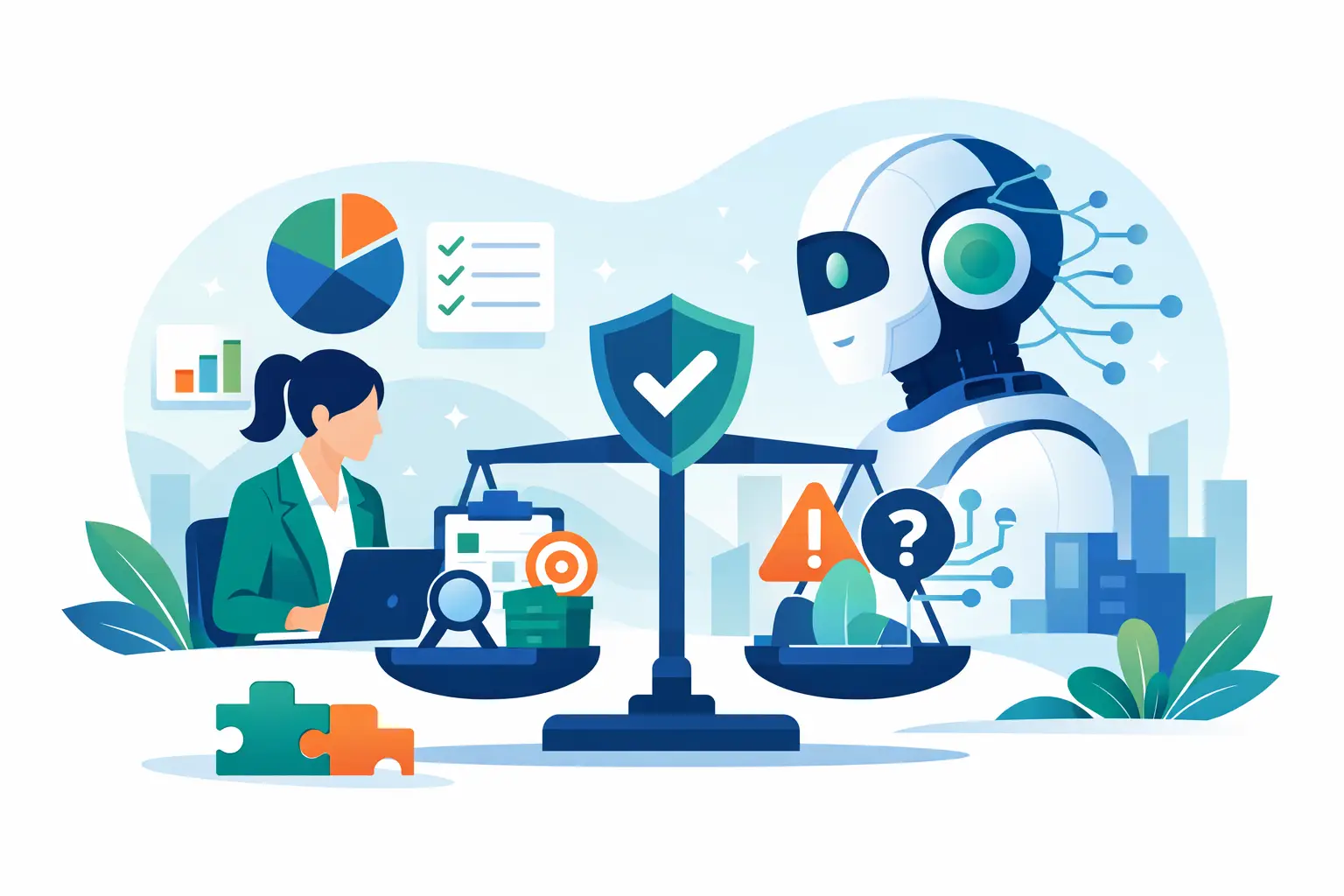
Is AI safe for business planning? Yes, when it is used as structured decision support rather than an unaccountable decision-maker. It can compress research, expose assumptions, build scenarios and turn a rough idea into an executable plan. But it cannot carry the legal, financial or commercial responsibility for the outcome. That remains with the business owner and leadership team.
For lean companies, this distinction matters. Used well, AI gives you faster access to C-suite thinking without waiting weeks for an adviser. Used carelessly, it can make weak data, misplaced confidence and rushed decisions move faster too.
Where AI is safe for business planning
AI is strongest where the work needs structure, range and speed. It can help you turn an unclear challenge into a set of questions worth answering, compare strategic options, draft a market-entry plan or identify the operational steps behind a growth target.
Consider a business planning a move from £40,000 to £80,000 in monthly revenue. An AI system can map the revenue gap, estimate the volume of leads or sales required, suggest channels to test, identify capacity constraints and create a 90-day action plan. That is useful because it turns ambition into operating detail.
It is also highly effective as a challenge partner. Ask it to argue against your preferred strategy, list the assumptions behind a forecast, or identify why a competitor may be able to undercut you. Founders often need this kind of friction. The first plan is rarely the best plan, but it is much easier to improve a plan once it is visible.
AI can add real value in four areas:
- Strategic framing, including goals, priorities, positioning and scenario planning.
- Financial preparation, such as cash-flow assumptions, pricing models and sensitivity checks.
- Market and customer analysis, including personas, objections, competitor patterns and messaging angles.
- Execution planning, from weekly priorities and project scopes to sales plays and marketing calendars.
These are planning tasks, not guarantees. The output becomes safer when you treat it as a working document to inspect, test and refine.
Where AI needs tighter controls
Business planning becomes higher risk when the answer depends on confidential information, current regulations, precise financial figures or context the tool does not have.
An AI tool may produce a sensible-looking tax position, employment process or contractual clause that is wrong for your circumstances. It may cite an outdated rule. It may fill a gap in the information with an assumption that it does not state clearly. The wording can sound certain even when the underlying basis is incomplete.
That does not make AI useless for legal-style or financial work. It makes the role clear. Use it to prepare questions, organise documents, identify areas for review and understand the likely commercial implications. For regulated advice, statutory obligations, complex tax matters, employment disputes, investment decisions or binding contracts, involve a qualified professional.
The same rule applies to forecasts. AI can build a model quickly, but a forecast is only as credible as its inputs. If your conversion rate, churn, fulfilment costs or sales cycle are guessed, the resulting plan is a polished version of a guess. A confident financial choice requires verified numbers and a clear view of what could change.
The real risk is poor inputs, not just poor outputs
Many leaders ask whether AI hallucinates. It can. Yet the more common business problem is that people provide vague, incomplete or biased information, then accept an answer that reflects those weaknesses back to them.
“Create a growth plan for my agency” will generate generic advice because it gives the system almost nothing to work with. A better brief sets the commercial context: current revenue, margins, capacity, target market, lead sources, average deal value, close rate, sales cycle, constraints and growth target.
Then ask for assumptions to be labelled. Ask for missing information to be listed before recommendations are made. Ask for best-case, expected and downside scenarios. This changes AI from an answer machine into a disciplined planning process.
A useful prompt does not need technical language. It needs business clarity. State the role you want it to take, the decision you are making, the numbers that matter, the constraints you cannot ignore and the format you need back. A founder deciding whether to hire a salesperson needs a different analysis from one deciding whether to improve retention or raise prices.
Build an AI-safe planning workflow
The safest businesses do not rely on one prompt and one response. They use a repeatable workflow that puts judgement at the right points.
Start with a decision, not a general request
Define the decision in one sentence. For example: “Should we add a second service line this quarter without reducing our current delivery quality?” This keeps the work commercially focused and stops planning from becoming an interesting but irrelevant exercise.
Separate facts from assumptions
Give AI the data you know, then identify what is estimated. Revenue from your accounts is a fact. Expected demand after a price increase is an assumption. Keep them separate in every plan, forecast and recommendation.
This also makes team discussions more productive. Instead of debating the entire strategy, you can test the two or three assumptions that truly drive the outcome.
Ask for alternatives and failure points
Do not ask only, “What should we do?” Ask, “What are three viable options?”, “What would have to be true for each option to work?” and “What would cause this plan to fail?”
Good strategy is not finding a single perfect answer. It is choosing a route with eyes open to cost, timing, downside and opportunity cost.
Verify the high-stakes claims
Check any figures, market claims, legal statements and references to current regulation before they influence action. Use your source data, trusted industry information and professional advisers where the consequence of error is material.
For planning purposes, assign an owner to each key number. Someone should be able to answer: where did this come from, when was it last checked, and what would change if it is wrong?
Keep sensitive information under control
Never assume every AI tool handles business data in the same way. Before sharing customer data, employee information, financial records, passwords, unreleased product details or commercially sensitive documents, understand the platform’s data settings, retention policy and access controls.
Use anonymised or aggregated information where possible. Limit access by role. Create a simple internal rule for what employees can and cannot paste into an AI system. This is not bureaucracy. It is basic commercial protection.
Human judgement remains the competitive advantage
AI can process options faster than a small team can. It cannot fully understand the trust you have built with clients, the political reality inside a partnership, the capability of a new hire or the instinct that a key customer is becoming a risk.
Those factors are not soft extras. They often determine whether a plan succeeds.
The best use of AI is therefore not to replace leadership, but to give leadership a stronger starting point. It can act like an always-available analyst, strategist and execution coach, helping you arrive at meetings with clearer questions and leave with defined actions.
A role-specific platform such as RPM ReallyDoing.It can make this easier by directing a planning problem to the relevant business function rather than relying on a generic conversation. That structure reduces the learning curve, but it does not remove the need to review the output against your numbers, customers and risk appetite.
A practical standard for trusting AI output
Before acting on an AI-supported plan, put it through a simple test. Can you explain the decision in plain language? Are the critical assumptions visible? Have the high-impact facts been checked? Is there a downside scenario and an owner for the next action?
If the answer is yes, AI has probably improved the quality and speed of your planning. If the answer is no, you have a draft, not a decision.
The businesses that gain most from AI will not be those that hand over control. They will be the ones that use it to think more clearly, test plans earlier and execute with greater discipline. Give AI the work of organising the options. Keep the responsibility for choosing the direction exactly where it belongs.