A supplier sends over terms at 4.47 pm on Friday. A client wants your proposal signed today. A new hire needs an updated agreement before Monday. This is where AI legal review for small business starts to make commercial sense - not as a replacement for a solicitor, but as a faster way to spot issues before they become expensive.
For most small firms, legal bottlenecks are rarely about ambition. They are about time, cost, and access. You do not always need a full legal opinion to move forward. Often, you need a sharp first-pass review that tells you what looks standard, what looks one-sided, and what deserves proper legal escalation. That is where AI can create real momentum.
What AI legal review for small business actually does
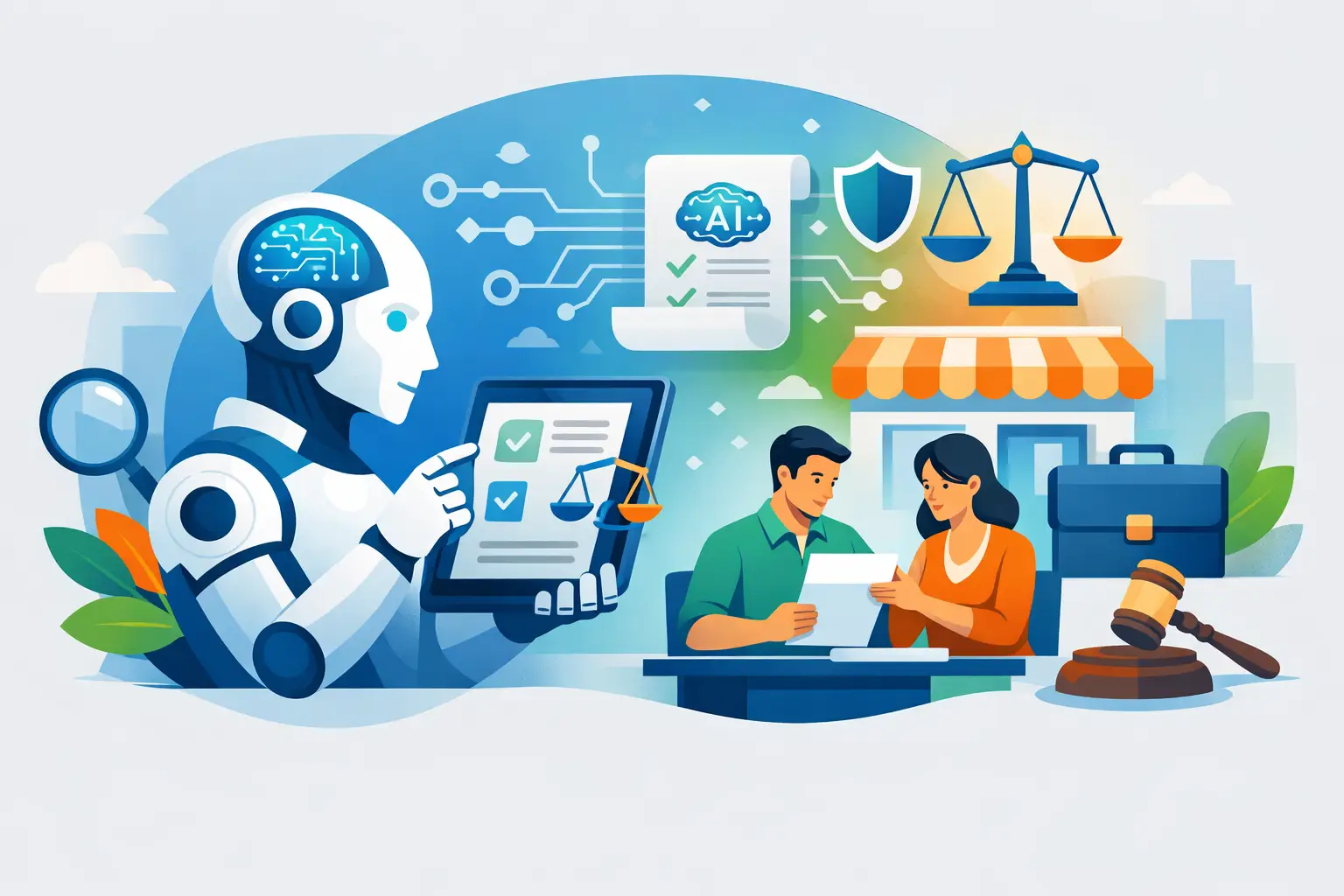
At its best, AI legal review reads business documents the way a commercially aware operator needs them read. It can scan contracts, terms, NDAs, supplier agreements, service agreements, and policy drafts, then flag clauses that may expose you to avoidable risk.
That usually means highlighting payment terms, auto-renewals, liability caps, termination rights, indemnities, exclusivity, intellectual property ownership, data protection wording, and dispute clauses. It can also translate dense legal language into plain English so a founder or manager can understand the practical effect of what they are being asked to sign.
This matters because many small businesses do not lose money on dramatic legal disputes. They lose it in quieter ways - vague scope, weak payment protection, broad liability, or contracts that lock them into poor terms for too long. A fast review does not remove risk completely, but it gives you visibility before you commit.
Why small businesses are turning to AI first
Traditional legal support still has a clear place. The problem is that many day-to-day documents do not justify the delay or cost of a full legal workflow, especially when your business is moving quickly.
Founders and lean teams are under pressure to make decisions now, not next week. If every routine agreement needs a solicitor before anyone can act, execution slows. Sales stall. Supplier decisions drag. Hiring gets delayed. The hidden cost is not just fees. It is lost momentum.
AI changes that first layer of review. It gives you immediate structure. You can ask what a clause means, whether a term is unusual, what commercial risks sit inside the document, and which points should be negotiated. Instead of sending every document out cold, you approach legal review with a clearer brief and better questions.
That alone can reduce legal spend. When you do need a solicitor, you are not paying them to identify the obvious. You are paying them to advise on the parts that truly need expert judgement.
Where AI legal review works well
The strongest use case for AI legal review for small business is high-volume, repeatable document checking. If you regularly handle client contracts, contractor agreements, website terms, service terms, simple leases, software subscriptions, or supplier paperwork, AI can help you assess them faster.
It is especially useful when the goal is triage. You need to know whether a document looks broadly acceptable, where the red flags are, and what should be amended before signature. For a busy agency owner, e-commerce operator, consultant, or SaaS founder, that can save hours each month.
It also helps with internal consistency. If your business has preferred positions on payment windows, ownership of work, notice periods, or limitation of liability, AI can compare incoming wording against those positions and point out where a contract drifts away from them.
For businesses without an in-house legal function, that kind of structured review can feel like gaining operational control rather than adding another tool.
Where it does not replace a solicitor
This is the part that matters. AI can support legal review. It cannot carry legal accountability.
If you are dealing with regulated sectors, complex employment disputes, litigation risk, share structures, mergers, investment rounds, property issues, cross-border arrangements, or anything with serious financial exposure, proper legal advice is still the right move. The same applies where the wording is highly bespoke or the commercial stakes are significant.
There is also a difference between spotting a risky clause and deciding whether that risk is worth accepting. That decision depends on leverage, deal value, sector norms, and broader business strategy. AI can surface the issue. An experienced adviser decides how hard to push and what the trade-off means.
Used well, AI reduces noise and sharpens judgement. Used badly, it creates false confidence. Small businesses need to be clear on that distinction.
How to use AI legal review without creating new risk
The smart approach is simple. Treat AI as your first-pass reviewer, not your final authority.
Start by using it to summarise the document in plain English. Then ask it to identify unusual clauses, one-sided obligations, unclear definitions, missing protections, and points that favour the other party. After that, ask for a negotiation view: which clauses matter most commercially and which requests are realistic to amend.
What you should not do is paste in sensitive material carelessly, rely on unsupported legal claims, or assume every suggestion is jurisdiction-specific and correct. You still need a human decision-maker involved. If the contract is important, someone qualified should check the final position.
This works best when your business has a clear review process. For example, contracts under a certain value may be handled internally with AI support, while higher-risk agreements go to external legal counsel after AI has already flagged the key issues. That kind of filter protects speed without abandoning caution.
What to look for in an AI legal review tool
Not all AI support is equally useful. Generic chat tools can produce broad commentary, but they often lack business context and consistent review structure. Small businesses usually need something more practical - guidance framed around decisions, risk visibility, and next steps.
A good tool should help you understand the document, not impress you with jargon. It should identify common commercial risks, explain their likely impact, and help you prepare sensible amendments or questions. It should also fit into the way your team works, especially if you are handling sales, operations, finance, and legal checks with the same small group of people.
This is why role-based AI support is often more valuable than a blank prompt box. If the system is built to think like a legal-style reviewer within a broader business context, you get output that is easier to act on. For entrepreneurs who need speed and control, that matters more than novelty.
Platforms such as RPM ReallyDoing.It position this well by giving businesses access to specialised AI support framed around executive functions rather than generic chat. That makes adoption simpler for teams that need outcomes, not experimentation.
The commercial upside is bigger than legal cost savings
Most founders first look at AI legal review as a way to cut solicitor bills. That benefit is real, but it is not the biggest one.
The bigger gain is decision speed. When your team can review terms quickly, ask stronger questions, and escalate only where needed, the business moves with more confidence. Sales cycles tighten. Supplier decisions improve. Internal approvals become less chaotic. You stop treating every legal document like a black box.
There is also a confidence effect. Small business owners often sign weak terms because they feel outmatched by legal wording or do not want to delay a deal. AI can level that first stage of understanding. Once the document is translated into practical business impact, negotiation becomes easier.
That does not mean you win every clause. It means you know where you are conceding, where you should push back, and where the risk is acceptable because the commercial upside justifies it.
AI legal review is most useful when it is built into operations
The businesses getting the most value from AI are not using it as a novelty check. They are building it into how decisions get made.
That means setting review thresholds, defining fallback positions, keeping standard templates updated, and making sure someone owns the final sign-off. AI supports the process, but process still matters. Without that discipline, faster review can simply lead to faster mistakes.
For small businesses, the real opportunity is not to imitate a large legal department. It is to create a leaner, sharper system that gives you early visibility, better questions, and fewer avoidable errors. When legal review becomes faster and more structured, the whole business operates with more control.
If you are still signing contracts you have only half-understood because proper review feels too slow or too expensive, that is the signal. Start with AI where the risk is manageable, keep human judgement where the stakes are higher, and give your business the advantage of acting quickly without acting blind.